
 Colic is one of those things new parents dread hearing about, mainly because it feels like a mysterious condition that turns your little one into the most inconsolable version of themselves. Essentially, colic is defined by a baby who’s healthy but cries intensely for more than three hours a day, more than three days a week, for at least three weeks. It usually starts a few weeks after birth and can last up to a few months, or in rare cases, a bit longer.
Recognizing colic isn’t always straightforward. Picture trying everything from feeding to changing diapers, yet the crying continues. If the crying is mostly in the late afternoon or evening and seems more like distress than regular fussiness, experts might check for colic. It’s advisable to check with your pediatrician when you notice these patterns, mainly to rule out other potential issues.
Despite the myths floating around, colic has no single known cause, which adds to its mysterious reputation. Some medical professionals suggest it’s related to digestive issues or sensitivities, like an underdeveloped digestive tract. Others think it might be triggered by the baby’s temperament as they adjust to the world outside the womb. The tension and stress it causes can definitely make it feel bigger than it actually is.
A common question parents have is how to know if their baby really has colic or if it’s something else. Diagnosing colic relies on the three-tier rule I mentioned earlier, but check-ups with a pediatrician are vital to rule out any medical conditions, since colic itself doesn’t lead to health problems. It’s just tough to experience for everyone involved.
Being informed about what colic is, what signs to expect, and when to consult an expert can help you feel a bit more in control. Remember, even if it feels overwhelming, getting insights from professionals or fellow parents who’ve been there can offer invaluable support and assurance.
Choosing the Right Bottle: Anti-Colic Features & Expert Recommendations
 Picking the right baby bottle feels like an expedition sometimes, doesn’t it? Well, when it comes to preventing colic, it turns out the bottle choice could make a real difference. Anti-colic bottles might become your best allies. Experts suggest they can reduce the amount of air the baby ingests, a key player in reducing colic symptoms.
Among the top recommendations are bottles with vent systems, designed to keep air separate from milk. This reduces air bubbles, which could cause discomfort. It’s like having a tiny air traffic controller directing bubbles away! Brands spotlighted by healthcare professionals often include Dr. Brown’s and Philips Avent, noted for their reliable design. They might seem like a splurge, but many parents find them worth every penny for the peace they bring.
When choosing a bottle, keep an eye out for features like nipple flow. Nipples often mimic the breast, easing the transition for breastfed babies. A slow flow keeps baby from gulping air, which can be a game-changer. Also, a flexible bottle material can allow for easy squeezing, reducing the need for babies to suck too hard, which again minimizes air intake.
Some bottles excel uniquely due to the materials they use. Silicone and soft plastic are frequently recommended because they’re less prone to damage. Plus, they often handle sterilization better, which could be a concern given how often you’ll need to clean and use them. Always consider the ease of cleaning alongside anti-colic features, as remnants of bacteria can irritate sensitive stomachs.
Deciding why one bottle works better over another often boils down to thoroughly understanding these features. A successful bottle might have a combination of factors that make feeding smoother and reduce discomfort. Remember, a conversation with your pediatrician about your baby’s specific needs can lead you to the best choice, helping you feel more confident in your decision.
The Science Behind Anti-Colic Bottles
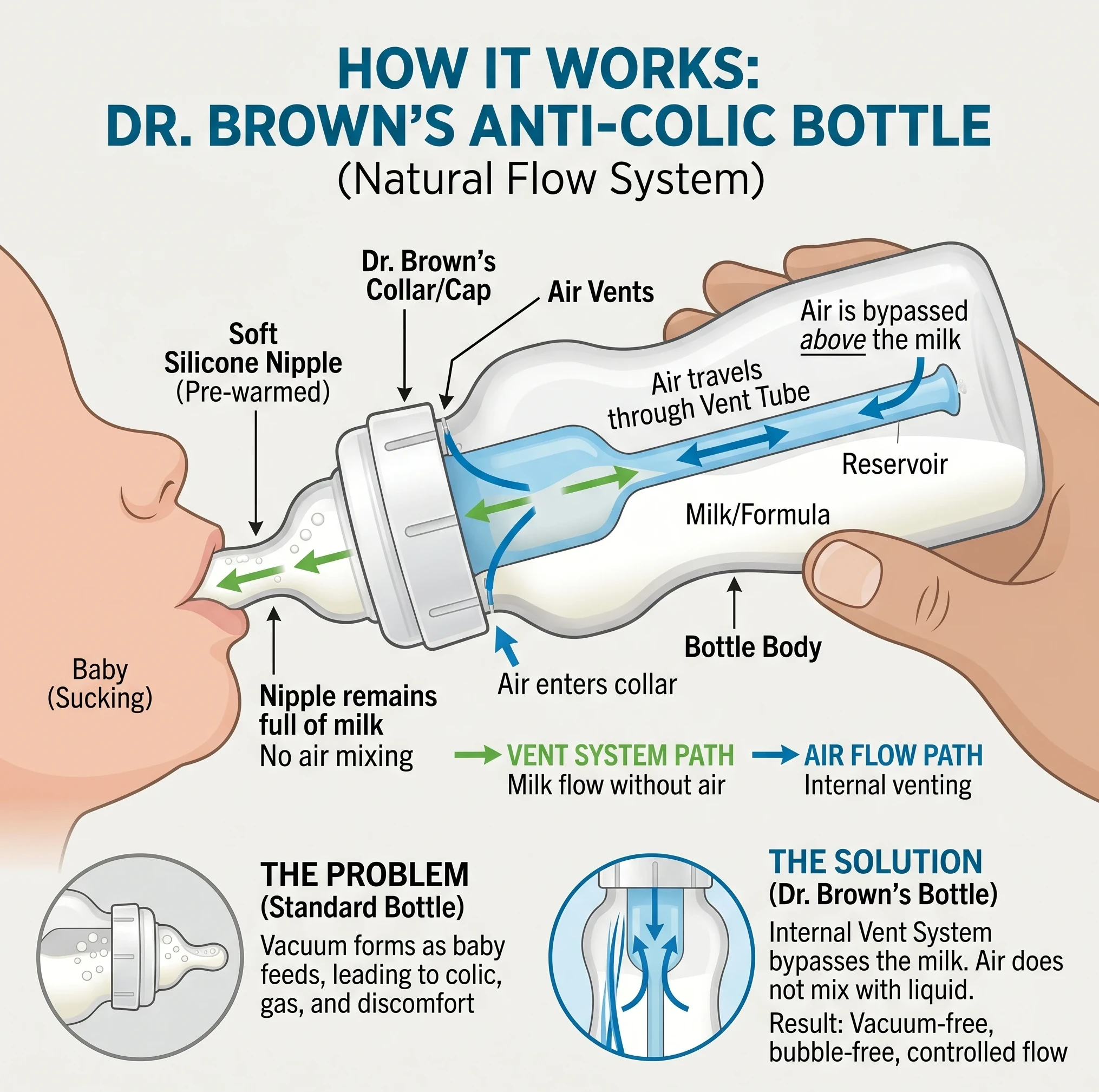 There’s some interesting science behind how anti-colic bottles work to ease those stressful crying episodes. Their secret often lies in design features meant to control airflow and pressure within the bottle. This helps keep air from mixing with milk, reducing gas and discomfort in your baby.
Anti-colic bottles commonly use vent systems. These can come in various forms, from simple valves to more complex inner tubes that redirect airflow. When the baby feeds, air gets pushed out through these vents instead of into the milk. This method closely mimics breastfeeding, where less air is swallowed due to a natural latch, giving the bottle-fed baby a similar experience.
Newer innovations include bottles with smart technologies. Some are equipped with built-in sensors to help track feeding amounts and patterns, which can be extra handy if you’re monitoring intake due to colic worries. However, the primary factor remains the effective release of air from the feeding system.
Parents sometimes ask how they can verify the efficacy of these bottles. Start by observing your baby’s reactions. Less fussiness after feeding and visible reduction in spit-ups are good indicators. Some parents do a water test, shaking a filled bottle to check for leaks or bubbles escaping through the vent instead of into the liquid.
Consultation with pediatricians can provide added assurance you’re on the right track. Many doctors can recommend tried-and-true brands based on their personal experience with patients.
Ultimately, the goal is to find a bottle system that your baby accepts well and that minimizes their discomfort during and after feeds. Observing your baby and staying informed about the latest features can drastically enhance your bottle selection process.
Techniques and Schedules for Feeding a Colicky Baby
Feeding a colicky baby comes with its own set of challenges, but with a few strategic adjustments, you can ease the rough patches quite a bit. One of the keys is slow and steady feeding. Offering smaller, more frequent meals often helps because it’s easier on your baby’s digestive system. Smaller portions mean less air intake and less chance for discomfort later.
Positioning during feeds can have a big impact. Holding your baby upright while feeding can aid digestion and prevent milk from flowing too quickly. It also allows gravity to help keep things moving smoothly, potentially reducing the chance of air getting trapped in their little bellies.
A consistent feeding schedule might also make a world of difference. Babies often thrive on routine, and sticking to set meal times can help regulate their digestion. While it isn’t a magic fix, consistency can offer comfort and predictability amidst the chaos of colic.
After feeding, incorporating a gentle patting routine to burp your baby can help release any air swallowed during feeding. Some parents find success by holding their baby upright against their chest and slowly patting or rubbing their back until they hear that satisfying burp.
Among the common tips pediatricians suggest is paying attention to the baby’s cues. Ideally, feed your baby when they show signs of hunger, such as sucking on their fists or making rooting gestures. Watching for these signs in real-time can ensure they’re not getting too hungry, which can lead to frantic eating and more air swallowing.
Always remember, when dealing with colic, it’s okay to seek extra advice from healthcare providers. They can offer tailored suggestions based on their extensive experience with similar cases. A scheduled check-up might just save you from countless hours of guesswork, providing clarity on the best feeding practices for your little one.
Natural Remedies and Holistic Approaches to Colic
Colic can sometimes make you feel like you’re trying to solve a puzzle with missing pieces. While bottles and feeding techniques are essential, natural remedies often provide added relief. Many parents turn to holistic approaches to soothe their little ones in a gentle, side-effect-free way.
One option is infant massage, which can relax your baby and potentially help with digestion. Gently massaging their stomach in a clockwise motion is often recommended, as this follows the natural direction of the digestive tract. This technique can ease tension and aid in moving trapped gas along.
Aromatherapy using chamomile or lavender oil is another route some parents explore. Remember, though, these oils should never be applied directly to the skin. Instead, you can add a few drops to a diffuser or a warm bath. Always ensure the room is well-ventilated and watch your baby’s reaction to notice if it’s helping them calm down.
Certain herbal teas, like chamomile tea, have been traditionally used by breastfeeding mothers. Drinking these yourself may provide mild calming effects through breast milk, though this isn’t backed by solid scientific evidence. It’s vital to consult your doctor before trying herbal solutions, to ensure they’re safe for both you and your baby.
The concept of babywearing can be remarkably effective too. Carrying your baby in a wrap or carrier throughout the day can offer them comfort from the warmth and proximity to you, which can be soothing. It might also help them cry less, as studies suggest babies who are worn often experience reduced crying time.
Incorporating these practices allows for a holistic approach to managing colic, adding layers of comfort for your baby. Always keep your pediatrician in the loop when trying out new remedies to ensure you’re steering in the right direction and maintaining safety for your little one.
Essential Products and Tips for Parents of Colicky Babies
Navigating through the colicky phase can feel like a marathon, but equipping yourself with the right gear can really turn the tide. Having trusted baby essentials on hand can not only bring ease to your baby but offer peace of mind as well.
Pacifiers can be a lifesaver for some families. They provide comfort and help with self-soothing, which can be especially handy during intense crying spells. Look for options made of soft, durable materials that mimic the feel of skin, making them more acceptable to your little one.
White noise machines are worth considering too. By replicating the calming sounds babies hear in the womb, these machines can provide much-needed distraction and comfort, helping to settle your child during particularly fussy times.
Swaddles and sleep sacks are often recommended by experts, as the gentle pressure they provide can mimic the cozy confines of being in the womb. Opt for breathable fabrics that allow for flexibility while keeping your baby from startling themselves awake.
A comfy, adjustable baby carrier can free up your hands while providing the nurturing closeness your baby craves. Carriers also allow you to keep your baby upright post-feed, reducing the chances of colic-related discomfort.
It’s also important to create a soothing environment. Dimming lights in the evening and keeping sounds soft can help create a calming atmosphere that encourages relaxation for both you and your baby.
Managing your own stress during colic episodes is equally important. Practicing self-care and ensuring you have a support network to lean on during demanding times can make all the difference. It’s perfectly fine to ask for help too—whether it’s from family, friends, or a professional—everyone needs a break sometimes.
Colic was an issue I had with my eldest child. I had tried different approaches to help with her discomfort and prolonged periods of crying. The one that I found was most effective with her was placing her in a baby swing. It was usually for short periods of time, but I feel it was the gentle motion of the swinging that help ease her discomfort, and eventually allow her to sleep. In your article, you talk about different the different bottles that are available to help prevent colic. Have you tried any of these bottles, and if so, which would you recommend?
Thank you for sharing your experience, Pauline. Colic can be such a challenging and exhausting time for parents, so it’s always valuable to hear what worked for other families. The gentle motion of a baby swing can certainly be soothing for some babies, and many parents find that movement, cuddling, rocking, or carrying their baby helps provide comfort during those difficult periods.
When it comes to anti-colic bottles, every baby is different, so there isn’t one solution that works for everyone. However, some of the most popular options among parents are designed to reduce the amount of air babies swallow during feeding, which may help minimise gas, discomfort, and fussiness.
One of the most commonly recommended options is the Dr. Brown’s Anti-Colic bottle, which uses an internal vent system to help reduce air intake during feeding. Many parents report positive results, particularly for babies who seem prone to wind and digestive discomfort. Other well-regarded options include Philips Avent Anti-Colic, Tommee Tippee Advanced Anti-Colic, and MAM Easy Start bottles, all of which are designed with features intended to support more comfortable feeding.
It’s important to remember that while anti-colic bottles can be helpful, they work best alongside other strategies such as frequent burping, paced feeding, keeping baby upright after feeds, and ensuring the teat flow is appropriate for your baby’s age and feeding style.
Thank you again for sharing your story and for asking such a great question. Hearing about different experiences helps other parents realise they’re not alone, and it often provides reassurance during what can be a very demanding stage of parenthood.